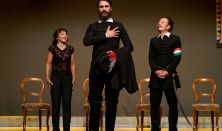
“The number seven has a special significance in almost every culture in the world—both sacred and secular—as well as in nature: it is the seven colours of the rainbow that is the biblical symbol of the covenant between God and mortals on earth. Christianity defines seven cardinal virtues, seven cardinal sins, and Roman Catholicism bases its doctrine on seven sacraments. God created the world in seven days. According to Islam, there are seven heavens and seven earths. In Judaism, seven is the number of perfection, representing harmony and wholeness. One of the most important symbols in Jewish culture is the seven-branched candlestick, which can be found in every temple and every household. The seven candles symbolise each of the person’s selves. The number seven even appears in ancient Hungarian culture. Seven Hungarian tribes arrived in the Carpathian Basin at the time of the conquest. Our folktales and legends also use the number seven: the seven-headed dragon, the seventh kingdom, the seven spots of the ladybird, and seventh heaven is the embodiment of heavenly happiness. The performance is based on these ideas, the mystery of the number seven.” (Zsolt Juhász)
Performed by Kristóf Kele, Márk Jenő Kissitkei-Kovács, Márton Opiczer, Ákos Östör, Donát Endre Patócs, Balázs Sáfrán, Zsombor Szabó
Composer: Sándor Csoóri Jr.
Set and Costume design: JuZso
Lighting Designer: Károly Lendvai
Production Manager: Fanni Nánay
Choreographer–Director: Zsolt Juhász